Sleep and Recovery: Why It Matters More Than You Think
Highlights / Key Takeaways
- Sleep is when muscle repair, hormone balance, and recovery actually happen
- Poor sleep slows muscle growth, fat loss, and workout performance
- Quality recovery reduces injury risk, burnout, and chronic fatigue
- Better sleep improves endurance, focus, and workout consistency
- Smart fitness combines effective training and intentional recovery
Introduction
When it comes to fitness, most people focus on workouts and nutrition—but overlook one of the most powerful performance tools: sleep. Whether your goal is weight loss, muscle building, or improved endurance, quality sleep and recovery play a critical role in achieving lasting results.
At ACME Fitness, we believe real progress isn’t made only in the gym or home workout space—it’s built during rest. This guide breaks down why sleep matters more than you think, how it directly impacts your fitness goals, and how to recover smarter for better performance.
The Science Behind Sleep and Fitness Performance
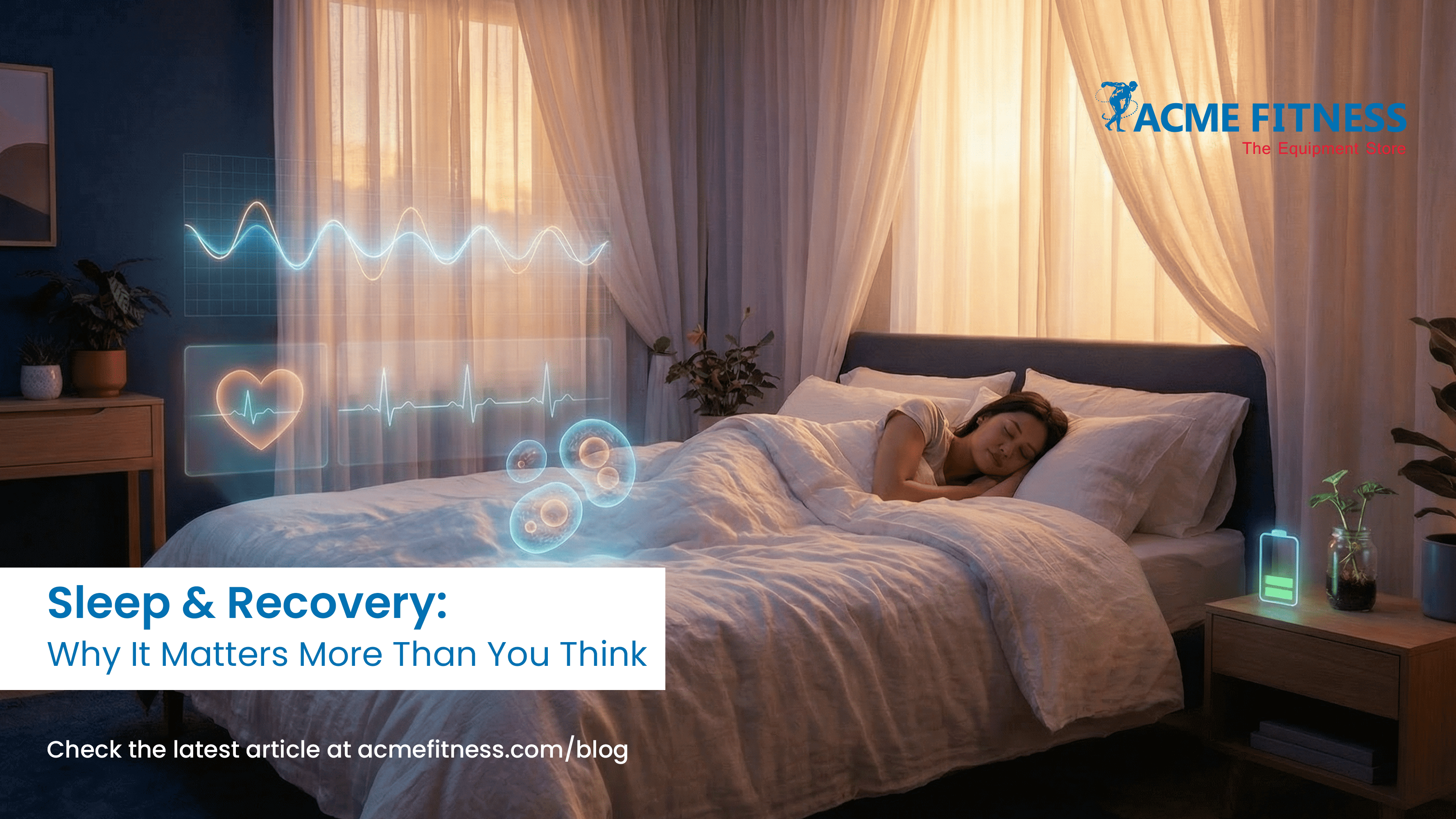
Sleep is the body’s natural recovery system. During deep sleep stages, your body works to:
- Repair damaged muscle tissue
- Release growth hormone for muscle development
- Restore energy and glycogen levels
- Regulate metabolism and hormone balance
Without adequate sleep, even the best-designed workout routine cannot deliver optimal results. Recovery isn’t optional—it’s essential.
How Sleep Directly Impacts Your Fitness Goals
Muscle Growth Happens During Sleep
Strength training creates microscopic tears in muscle fibers. These muscles don’t grow during workouts—they grow while you sleep.
Lack of quality sleep leads to:
- Slower muscle recovery
- Reduced strength and performance gains
- Increased risk of strain or injury
If your goal includes muscle toning or strength building, sleep is non-negotiable.
Sleep Affects Weight Loss and Fat Burn
Sleep directly regulates hormones that control appetite and fat storage:
- Ghrelin (hunger hormone) increases with poor sleep
- Leptin (fullness hormone) decreases when sleep-deprived
This imbalance increases cravings and overeating and slows fat loss—making weight-loss goals harder to achieve even with regular workouts.
Better Sleep = Better Workout Performance
Well-rested individuals experience measurable performance benefits, including:
- Improved endurance and stamina
- Better coordination and focus
- Higher workout intensity
- Faster reaction times
Whether you’re training on treadmills, ellipticals, or strength equipment, sleep helps you train harder—and safer.
Recovery Prevents Burnout and Injuries
Overtraining without adequate recovery often results in:
- Chronic fatigue
- Persistent muscle soreness
- Decreased motivation
- Higher injury risk
Sleep allows your muscles and nervous system to fully recover, helping you stay consistent and avoid setbacks.
The Connection Between Sleep, Stress & Mental Fitness
Sleep supports not only physical recovery but also mental resilience—an often-overlooked part of fitness.
Good sleep helps:
- Lower cortisol (stress hormone)
- Improve mood and motivation
- Enhance focus during workouts
- Prevent mental burnout
A calm, well-rested mind performs better both inside and outside your training sessions.
How Much Sleep Do You Really Need?
For most active adults:
- 7–9 hours of sleep per night is ideal
- High-intensity training may require more
- Consistency matters more than occasional long sleep sessions
Quality, uninterrupted sleep is more important than simply tracking hours.
Practical Tips to Improve Sleep for Better Fitness Results
Simple, actionable steps to improve recovery:
- Maintain a consistent sleep schedule
- Avoid intense workouts right before bedtime
- Limit caffeine and screen time in the evening
- Stretch or perform light mobility exercises
- Create a cool, dark, calm sleep environment
Pairing smart workouts with smart recovery is the fastest path to results.
How ACME Fitness Supports Smarter Training & Recovery
At ACME Fitness, we promote a balanced approach to fitness that includes:
- Home fitness equipment designed for safe, effective workouts
- Cardio and strength solutions that help prevent overtraining
- Expert guidance for sustainable, long-term fitness routines
Fitness isn’t about pushing harder—it’s about training smarter and recovering better.
Train Hard, Recover Smarter
Your fitness journey doesn’t end when your workout does. Sleep and recovery are just as important as lifting weights or running miles.
Prioritize rest.
Protect your progress.
Unlock better results.
Frequently Asked Questions (FAQs)
1) How much sleep is ideal for achieving fitness goals?
Most adults need 7–9 hours of quality sleep per night to support muscle recovery, fat loss, and workout performance. Intense training may require additional rest.
2) Can lack of sleep affect muscle growth?
Yes. Muscle repair and growth occur during deep sleep stages. Poor sleep reduces growth hormone release and slows recovery.
3) Does sleep impact weight loss results?
Absolutely. Poor sleep disrupts appetite hormones, increases cravings, and slows metabolism—even with consistent exercise.
4) Is recovery as important as exercise?
Yes. Recovery prevents overtraining, reduces injury risk, and improves long-term consistency and performance.
5) Can better sleep improve workout performance?
Better sleep improves stamina, coordination, focus, and endurance—helping you train more effectively.
6) How can I improve sleep quality while following a fitness routine?
Maintain a consistent schedule, avoid late-night workouts, reduce screen exposure, stretch lightly, and create a calming sleep environment.

Lorem ipsum dolor sit amet, consectetur adipiscing elit, sed do